



Orthodontic Pliers Types and Buying Guide

Lenox INS is located in London, ON, CA.
Key Takeaways
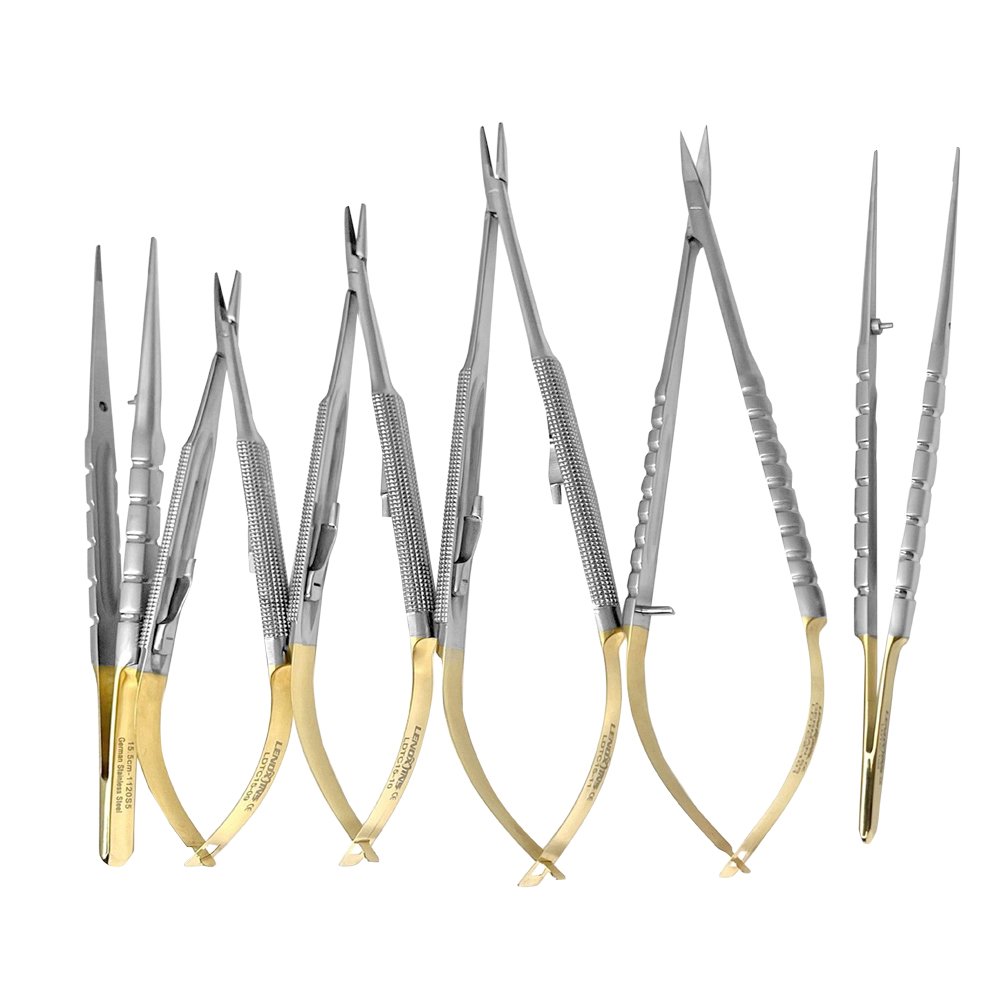
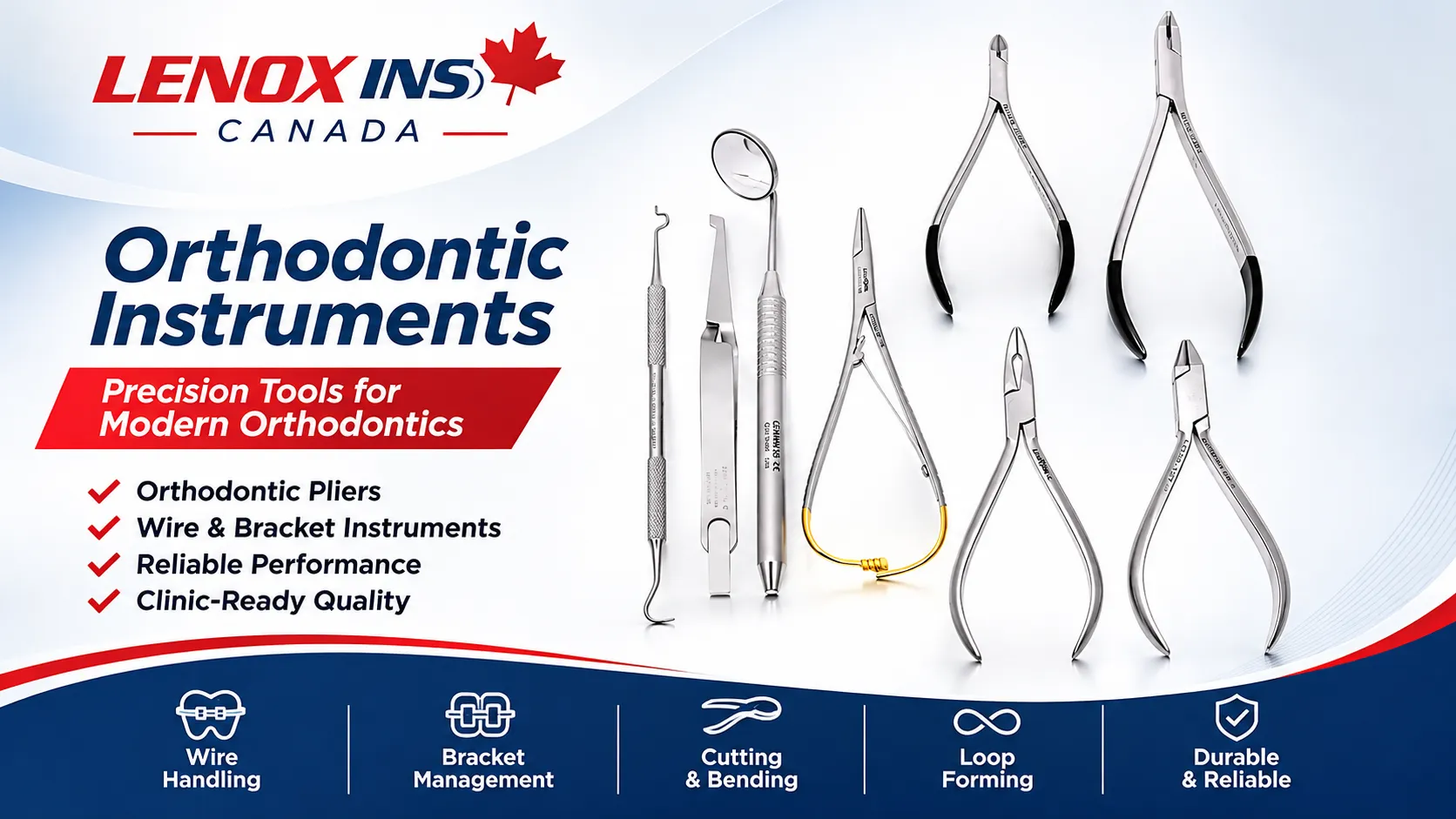
Orthodontic pliers divide into four groups: cutters, wire-bending and loop-forming pliers, utility pliers, and removal instruments.
A precision box joint with hardened steel surfaces resists lateral play far longer than a simple lap joint.
Adams pliers feature two cylindrical, tapered beaks that create smooth, precise bends without marring the wire surface.
Manufacturers specify maximum wire diameter for each cutter model; exceeding that limit stresses the hinge beyond its design tolerance.
What defines a high-grade orthodontic plier?
A high-grade orthodontic plier combines precision-machined working ends, durable stainless steel construction, and task-specific jaw geometry. Orthodontic pliers maintain their edge and alignment through thousands of autoclave cycles without loosening at the hinge.
Material quality separates professional instruments from disposable alternatives. Premium pliers use surgical-grade stainless steel with precisely hardened inserts at the cutting edges and gripping surfaces. The wrong plier for a task slows down bracket placement, damages wire, or wears out faster than expected. A matched instrument keeps the workflow smooth from diagnosis through debonding. Clinicians can select instruments based on instrument categories such as cutters, wire-bending and loop-forming pliers, utility pliers, and removal instruments.
How does jaw design affect clinical performance?
Jaw geometry determines what a plier accomplishes in a single motion. Serrated utility tips grip wire securely during placement. Smooth, rounded beaks form loops without scoring the archwire surface. A poorly matched jaw profile requires multiple adjustments to achieve what a purpose-built instrument completes in one action. This inefficiency compounds across a full patient schedule, stretching chair time and introducing variability into treatment mechanics.
Why does hinge quality matter for long-term value?
The hinge joint bears repeated stress during cutting, bending, and torquing movements. Instruments that develop hinge wobble within months force clinicians to compensate with altered hand positioning. That compensation reduces tactile feedback and increases the risk of wire slippage. Orthodontic practices across Canada source instruments directly from Lenox INS, based in London, ON, CA. This procurement model eliminates distributor markups while ensuring replacement coverage for manufacturing defects.
Which orthodontic pliers are essential for wire bending?
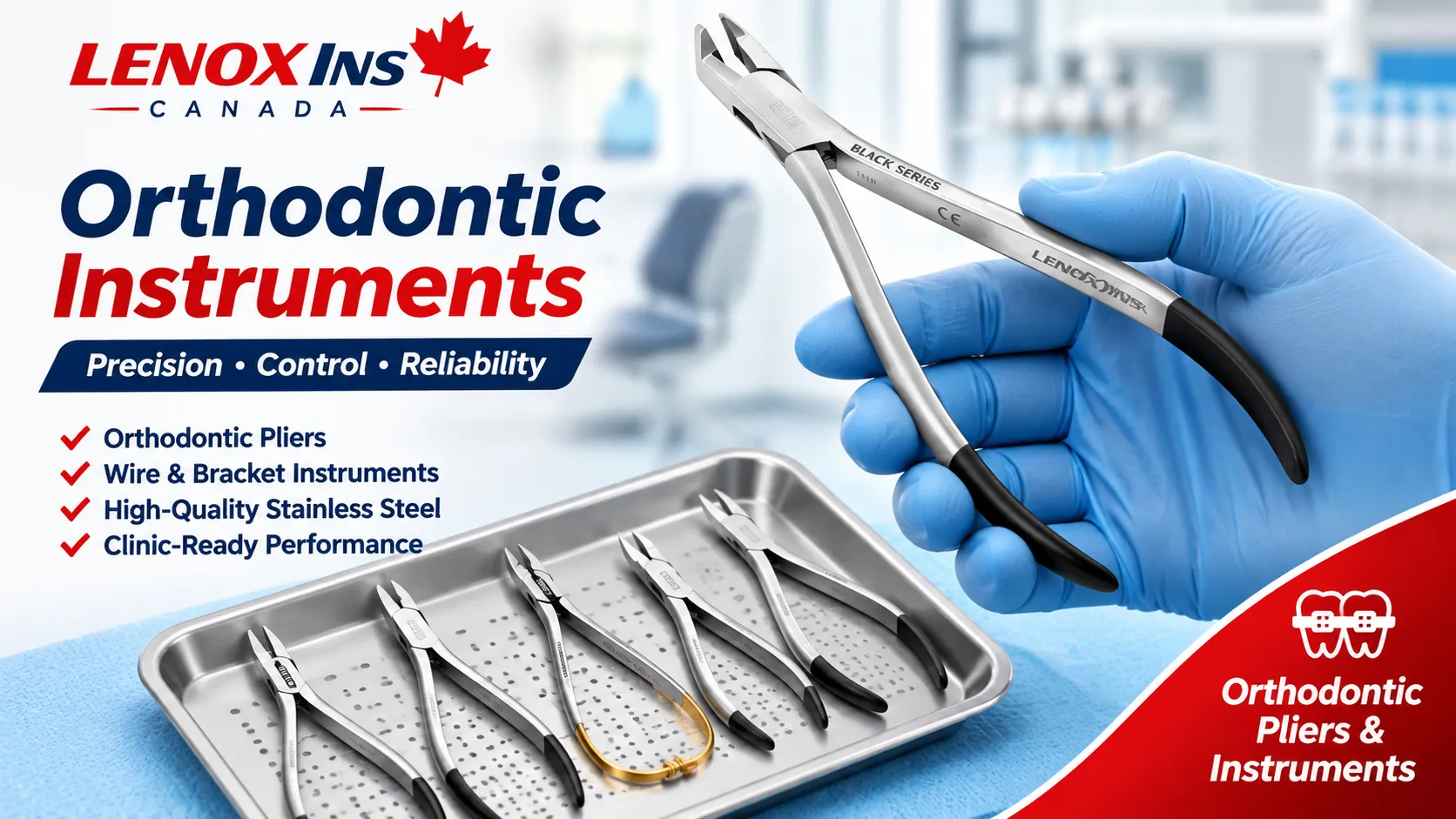
Wire bending demands instruments that grip, shape, and cut with absolute precision. Orthodontic pliers for this task fall into a dedicated category within the four practical groups of orthodontic instruments: cutters, wire-bending and loop-forming pliers, utility pliers, and removal instruments. A clinician without the correct bending pliers risks wire damage, extended chair time, and compromised treatment mechanics.
Adams pliers stand out as one of the most versatile orthodontic pliers for wire bending. Their round-tapered beaks make them ideal for bending and adjusting clasp wire on removable appliances and retainers. This single instrument handles complex contouring that lesser pliers cannot manage.
The workflow for an archwire change illustrates why multiple plier types are necessary. A serrated utility plier helps position the wire. A forming plier shapes it. A cutter separates it within a specified capacity. Relying on one instrument for all three actions introduces errors and slows the procedure.
What makes Adams pliers different from other bending pliers?
Their design suits intricate clasp adjustments on removable appliances. General-purpose pliers lack this specialized beak geometry and often leave unwanted marks on the wire.
How do forming pliers improve loop consistency?
Forming pliers incorporate stepped or grooved tips that produce uniform loops and helices in archwires. Consistent loop dimensions translate to predictable force delivery. Without a dedicated forming plier, achieving identical loops across multiple bends becomes a time-consuming challenge.
For Canadian orthodontic practices sourcing orthodontic instruments Canada, durability determines long-term value. Lenox INS is located in London, ON, CA. Instruments that resist wear and maintain alignment over years of daily sterilization cycles protect the practice’s initial investment and support consistent clinical outcomes.
How do orthodontic cutters differ by wire type?
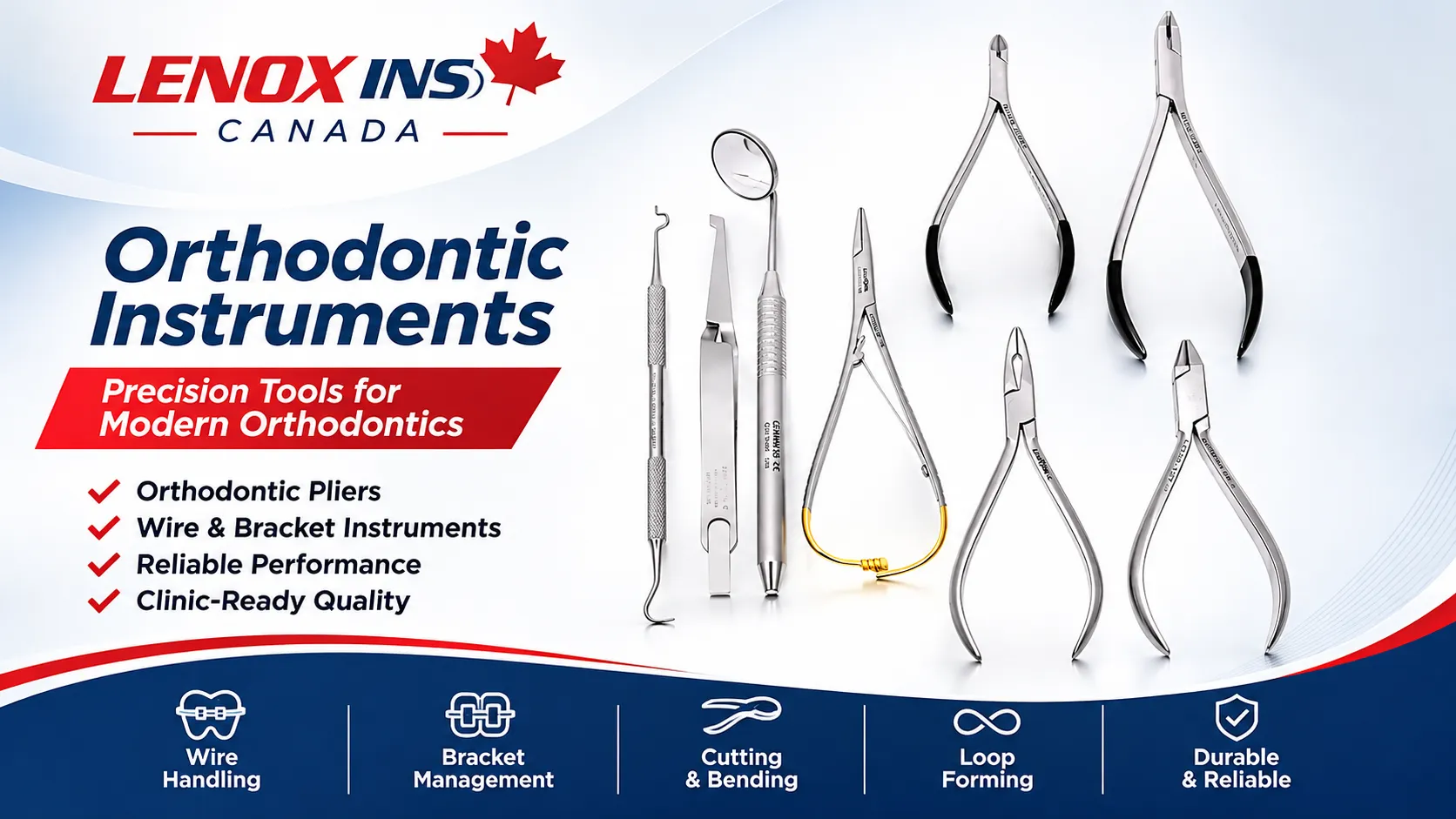
Orthodontic cutters separate into distinct categories based on wire gauge, material hardness, and the clinical task at hand. Cutting wire requires more than a sharp edge. Three cutter categories deserve separate consideration, and their names describe different jobs. Their allowable wire sizes are model-specific.
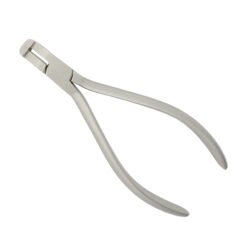
A distal end cutter trims the archwire extension beyond the terminal attachment. A cut-and-hold design retains the severed piece for removal, preventing the wire fragment from becoming a soft-tissue hazard or an aspiration risk. This instrument handles the heavier stainless steel wires common in finishing stages. Clinicians rely on it for safe, controlled cuts in the posterior region where access is tight.
Hard wire cutters tackle high-tensile stainless steel and cobalt-chromium wires. Their reinforced beaks and joints concentrate force at the cutting edge without deforming. Soft wire cutters, by contrast, suit lighter nickel-titanium or multistrand wires during initial alignment. Using a soft wire cutter on hard wire dulls the edge prematurely and leaves a ragged wire end that complicates insertion into the next bracket slot.
What is the risk of using the wrong cutter on a specific wire?
A mismatched cutter damages the instrument and the wire. Hard wire forced into a soft-wire cutter crushes rather than severs the strand. The resulting burr irritates soft tissue and increases chair time for refinishing. Repeated misuse accelerates joint wear, forcing early replacement of a precision instrument.
How does wire gauge influence cutter selection?
Manufacturers specify maximum wire diameter for each cutter model. Exceeding that limit stresses the hinge beyond its design tolerance. A cutter rated for 0.018-inch round wire fails predictably when applied to 0.021 × 0.025-inch rectangular stainless steel. Practices source orthodontic instruments directly from Lenox INS in London, ON, CA, ensuring clear manufacturer documentation. This documentation eliminates guesswork and protects the investment in high-precision orthodontic pliers.
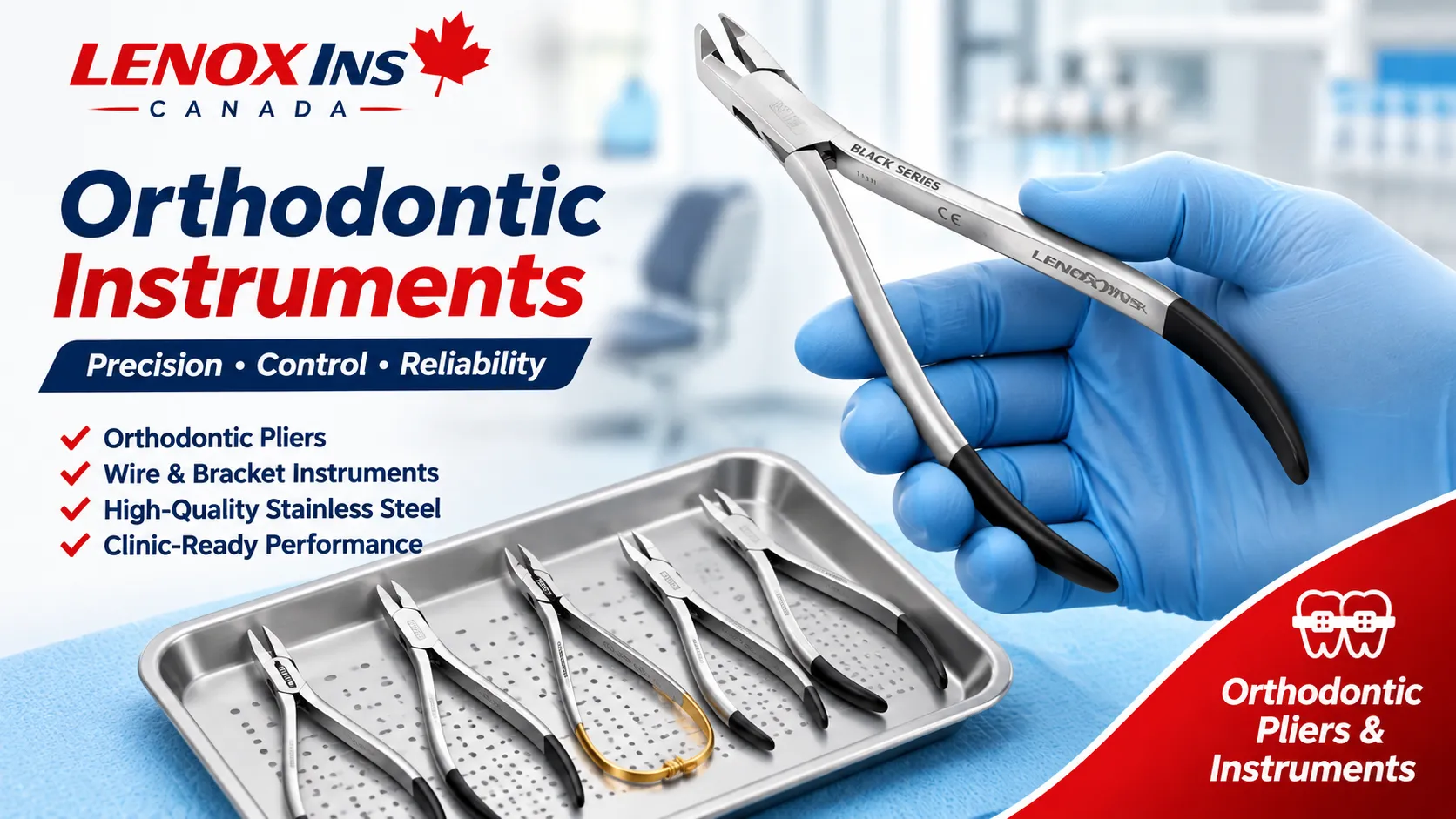
What should you evaluate before buying orthodontic pliers?
Selecting the right orthodontic pliers stands as one of the most consequential procurement decisions a dental professional makes. These precision instruments directly shape bending, cutting, gripping, and placement accuracy throughout every phase of treatment. A poorly matched plier compromises clinical outcomes and wastes valuable chair time.
Orthodontic instruments Canada practices rely on must meet rigorous daily demands. Clinicians opening a new practice, replacing worn tools, or expanding an instrument kit need a clear understanding of the different plier types available. Without that clarity, a clinic risks stocking instruments that fail under repeated sterilization cycles or deliver inconsistent wire engagement.
What role does instrument quality play in treatment efficiency?
High-quality orthodontic pliers reduce chair time and improve handling. Predictable treatment outcomes follow when instruments perform consistently across hundreds of procedures. Inferior tools introduce variability that erodes both efficiency and patient trust.
How does warranty protection affect long-term value?
A lifetime warranty transforms a plier purchase from a consumable expense into a durable asset. Lenox Instruments backs its dental tools with a lifetime warranty, reflecting confidence in materials and craftsmanship. This protection shields a practice from recurring replacement costs that accumulate silently over years of daily use.
Key evaluation criteria include:
Material composition: Stainless steel and carbide-tipped inserts determine edge retention and corrosion resistance.
Joint design: Smooth, box-joint construction prevents wobble and maintains alignment through autoclave cycles.
Ergonomic grip: Handle comfort reduces hand fatigue during long bonding or adjustment appointments.
Task specificity: Each plier type serves a defined function; a universal plier cannot match the precision of a dedicated loop-forming or distal-end cutting instrument.
Procurement managers weigh these factors against clinical workflow demands. A practice performing high-volume clear aligner therapy needs different pliers than one focused on traditional bracket-and-wire cases. Matching the instrument to the procedure prevents workflow bottlenecks and protects the consistency that referring dentists and patients expect.
How to maintain orthodontic pliers for long service life?
Orthodontic pliers represent a significant investment for any Canadian practice. Without consistent maintenance, precision instruments degrade rapidly. Tip pitting, hinge stiffness, and joint misalignment compromise clinical outcomes and force early replacement. A disciplined care protocol protects both instrument performance and procurement budgets.
What daily cleaning steps prevent orthodontic plier damage?
Proper cleaning begins immediately after each patient procedure. Wipe debris from tips and joints before sterilization. Follow ultrasonic bath guidelines precisely. The bath removes microscopic contaminants that manual scrubbing misses. Lubrication after every cycle keeps hinge mechanisms moving freely.
How does improper handling shorten plier lifespan?
Dropping pliers causes tip misalignment that no sharpening can correct. Storing instruments loose in drawers invites metal-on-metal contact. This contact creates surface pitting that snags archwires during placement. Hinge stiffness develops when lubrication schedules lapse. Stiff joints force clinicians to apply excess pressure, accelerating wear on both the instrument and the wire.
Orthodontic instruments Canada practices rely on must withstand repeated sterilization without degradation. Lenox Instruments builds its pliers to endure these demands. The company backs its products with a lifetime warranty, reflecting confidence in materials and craftsmanship. Seven employees dedicated to customer support and quality assurance ensure that procurement managers receive instruments meeting rigorous standards. Secure payment options simplify ordering for clinics outfitting multiple operatories.
A maintenance log tracks cleaning dates and identifies instruments approaching service intervals. Clinics that document care routines replace fewer pliers annually. The savings compound across a full tray of orthodontic instruments.
FAQ
What are the four main groups of orthodontic pliers?
Orthodontic pliers divide into four groups: cutters, wire-bending and loop-forming pliers, utility pliers, and removal instruments. ## Conclusion Selecting the correct orthodontic plier type and adhering to a disciplined maintenance protocol directly determines clinical efficiency and instrument longevity. A practice that evaluates material composition, joint design, and task specificity before purchase, then follows daily cleaning and lubrication schedules, protects its investment and reduces chair time. This procurement approach transforms a precision tool into a durable asset that delivers consistent wire engagement across hundreds of procedures.